An ASA | SoDa Symposium In Celebration of Privacy Week: Balancing Statistical and Non-Statistical Uses of Federal Data: Privacy, Governance, and Public Trust
Co-Sponsored by the American Statistical Association Privacy and Confidentiality Committee and the UMD Social Data Science Center
Two Presentations with Q&A
Wednesday, January 28, 2026
2:00 pm – 3:30 pm (ONLINE)
The U.S. federal government has long maintained a clear line between the statistical and non-statistical uses of the public’s information. The former includes purposes such as producing the Consumer Price Index; the latter includes determinations, such as about a specific household eligibility for a program. This functional separation has guided federal data practice for 50 years, and this safeguard is encoded in federal laws such as U.S. Code Title 13 and Confidential Information Protection and Statistical Efficiency Act (CIPSEA). This Privacy Day webinar examines the origins of this boundary (statistical vs. non-statistical purposes), how it is enforced today, and what it will take to preserve this crucial principle in an evolving federal data landscape.
1) The Evolution and Interpretation of “Statistical Purposes”
View Slides: 2026-01-28 ASA Privacy Day – Statistical Purposes
Presented by:
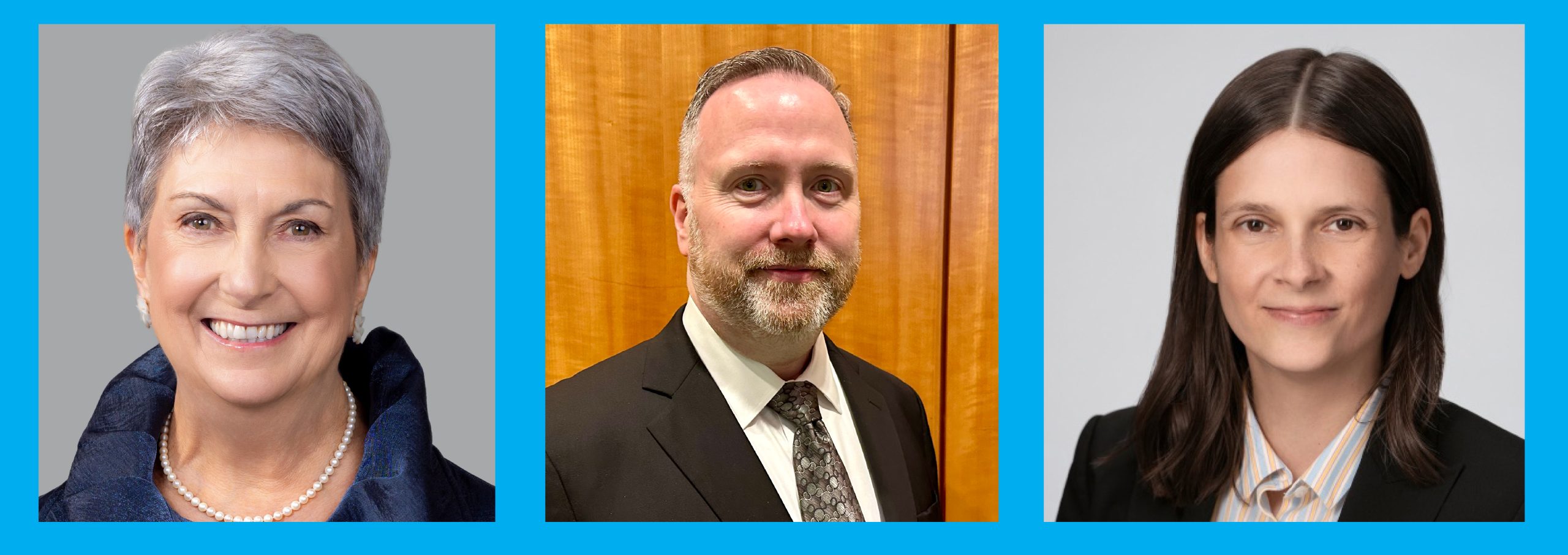
Sallie Ann Keller
Chief Scientist and Associate Director for Research and Methodology
U.S. Census Bureau
and
Michael B. Hawes
Senior Statistician for Scientific Communication
U.S. Census Bureau
Abstract:
Data subjects are often told their information will be used for “statistical purposes,” and statistical agencies are legally required to use these data “for statistical purposes only,” but what does this actually mean? In today’s data-driven world, statistics is a far-reaching and expansive discipline, actively used across virtually all scientific fields, and extensively leveraged, with myriad daily implications, both large and small, for the average person. With statistics being so broad a discipline, one might expect that the term “statistical purposes” (intuitively, those actions taken in pursuit of the generation, use, or interpretation of statistics), would be similarly expansive. We find in practice the definition has both been narrowed and expanded over time. In this presentation, we explore how the term “statistical purposes” has been ambiguously defined in law and regulation, and how it has been interpreted in practice by the U.S. federal statistical system. We will analyze how the legal and ethical guardrails of “statistical purposes” align with the core objectives and mission of a statistical agency.
2)The (Real and Imagined) Bounds of Statistical Purpose
View Slides: The (Real and Imagined) Bounds of Statistical Purpose – SoDa ASA Privacy Day Webinar (2026)
Presented by:
Alexandra Wood
Visiting Assistant Professor of Artificial Intelligence, Policy, and Society
Department of Political Science
Purdue University
Abstract:
Statistical purpose is a fundamental yet under-explored concept embedded in regulatory frameworks for privacy, data protection, and statistical confidentiality. As a special case of purpose limitation, it bounds the scope of permissible processing activities and implicates regulatory requirements distinct from those applicable to processing for other purposes. Originally intended to protect statistical integrity in the context of official statistics, the concept of statistical purpose has increasingly been applied in broader contexts. However, there is a notable lack of a consistent definition or clear guidance for determining when information is being processed for statistical purposes. In the absence of such guidance, a very wide range of interpretations of statistical purpose has emerged, often founded in differing assumptions about informational risk. This talk examines these interpretations, the assumptions they rely on, and their implications for policy and practice. Drawing on insights from statistical policy, ethics, and privacy research, it offers recommendations for clarifying and strengthening statistical purpose provisions in law and guidance.
Moderated by:

Jae June Lee
CQR Fellow
National Conference on Citizenship (NCoC)
About the speakers:
Dr. Sallie Ann Keller is chief scientist and associate director of the U.S. Census Bureau’s Research and Methodology Directorate. She also holds an endowed distinguished professorship of biocomplexity in the Biocomplexity Institute and faculty appointments in the School of Medicine, Department of Public Health Sciences, and School of Data Science at the University of Virginia (UVA).
As chief scientist, Keller leads the Research and Methodology Directorate’s research centers, each devoted to domains of investigation important to the future of social and economic statistics. The directorate collaborates with teams across the U.S. Census Bureau and with researchers around the country and the world to develop innovative scientific solutions and advances to ensure the Census Bureau remains a leader in economic and social measurement.
Keller is a nationally recognized research scientist whose areas of expertise are social and decision informatics, statistical underpinnings of data science, and data access and confidentiality. She is a leading voice in creating the science of all data and advancing this research across disciplines to benefit society.
Her prior positions include director of the Social and Decision Analytics Division within UVA’s Biocomplexity Institute and Initiative; professor of statistics and director of the Social and Decision Analytics Laboratory within the Biocomplexity Institute of Virginia Tech; academic vice president and provost at University of Waterloo; director of the Institute for Defense Analyses Science and Technology Policy Institute; the William and Stephanie Sick Dean of Engineering at Rice University; head of the Statistical Sciences group at Los Alamos National Laboratory; professor of statistics at Kansas State University; and Statistics Program director at the National Science Foundation.
Keller is an elected member of the U.S. National Academy of Engineering. She has served as a member of the National Academy of Sciences Board on Mathematical Sciences and Their Applications and the Committee on National Statistics, and as chair of the Committee on Applied and Theoretical Statistics. She is a fellow of the American Association for the Advancement of Science, an elected member of the International Statistics Institute, and a fellow and past president of the American Statistical Association. Keller earned her B.S. and M.S. in mathematics from the University of South Florida and her Ph.D. in statistics from Iowa State University.
Michael Hawes is the U.S. Census Bureau’s senior survey statistician for Scientific Communication. In this role, he is responsible for research and development in the area of scientific communication regarding agency initiatives and issues relating to access, management, quality, and confidentiality of Census Bureau data and statistical products. He also advises agency senior leadership on improving technical communication to scientific journals, government officials, agency partners, media, data users, and other stakeholders.
From 2019 until 2022, Michael served as the Census Bureau’s senior advisor for Data Access and Privacy where he was responsible for outreach and engagement with the Census Bureau’s data users on issues relating to the impact of statistical disclosure limitation methods on the accessibility and usability of census data. Prior to joining the Census Bureau, Michael served as the director of Student Privacy at the U.S. Department of Education where he was the department’s senior policy official responsible for the administration and enforcement of federal laws governing the privacy and confidentiality of education records. Michael also served as privacy consultant to the Federal Commission on Evidence-Based Policymaking.
Michael is a member of the Federal Committee on Statistical Methodology (FCSM) and serves as vice-chair of the FCSM-sponsored Federal Disclosure Review Officer Council. He is a certified government privacy professional (CIPP/G), a Project Management Professional (PMP), and a senior fellow of the Partnership for Public Service’s Excellence in Government program. He also serves as an appointed member of the American Statistical Association’s (ASA) Privacy and Confidentiality Committee.
Alexandra Wood is a Visiting Assistant Professor of Artificial Intelligence, Policy, and Society in the Department of Political Science at Purdue University. Additionally, she serves as an adjunct faculty member at Brandeis University and as an affiliate at the Berkman Klein Center for Internet & Society at Harvard University. Her research seeks to advance the co-design of law and computer science for the governance of emerging technologies and sociotechnical systems. She is a co-recipient of the 2019 Caspar Bowden Award for Outstanding Research in Privacy Enhancing Technologies for work introducing a framework for bridging computer science and legal approaches to privacy.
This event is co-sponsored by:
The American Statistical Association’s Privacy and Confidentiality Committee
The American Statistical Association
Our Mission: Promoting the Practice and Profession of Statistics®
Our Vision: A world that relies on data and statistical thinking to drive discovery and inform decisions.
The American Statistical Association is the world’s largest community of statisticians, the “Big Tent for Statistics.” It is the second oldest, continuously operating professional association in the country. Since it was founded in Boston in 1839, the ASA has supported excellence in the development, application, and dissemination of statistical science.
Our members serve in industry, government, and academia in more than 90 countries, advancing research and promoting sound statistical practice to inform public policy and improve human welfare.
The SoDa Center at UMD
SoDa Symposia highlight the diverse challenges and opportunities in the emerging area of Social Data Science. Combining insights of SoDa researchers and partners from UMD and around the world, these regular virtual events showcase research and expert commentary about advances and open problems in the use of surveys, administrative, and trace data to understand and shape the social world we live in. Ranging from technical challenges of gathering high-quality data, ethical management of social data at scale, or examples of the power of social data science in education, business, government, or civic life, SoDa Symposia provide an opportunity for a broad audience of researchers, students, and practitioners to learn more about the potential of social data science to change the world.