

A SoDa Symposium: Modernizing Economic Statistics
A Presentation with Q&A
Tuesday, March 10, 2026
12:00 pm – 1:00 pm (ONLINE)
Presenter:

Katharine Abraham
Distinguished University Professor, Department of Economics
Director, Joint Program in Survey Methodology
Professor, University of Maryland
TOPIC: Modernizing Economic Statistics
View Presentation Slides: SoDa presentation 3-10-2026
Abstract:
Traditional approaches to measuring economic activity are threatened by serious challenges, among others, declining survey response rates, a growing share of output in hard-to-measure sectors, and changes in the way that work is organized. At the same time, naturally occurring data that could be useful for improving the nation’s economic statistics—for example, retail scanner data, payroll provider records and online job postings records—are increasingly available in electronic form. Distinguished University Professor Katharine Abraham is the co-director of a new Economic Measurement Research Institute (EMRI) launched late last year with funding from the National Science Foundation to address these challenges and opportunities. EMRI’s mission is to bring academic researchers, data providers and statistical agency staff together to identify ways to modernize the nation’s economic statistics and to work towards putting the new methods that are identified into practice. Professor Abraham will talk about the EMRI and the future of the nation’s economic statistics.
Bio:
Katharine G. Abraham is a Distinguished University Professor and Professor of Economics and Survey Methodology. Her published research includes papers on discrepancies in alternative measures of employment, wages and hours; the measurement of economic activity; the work and retirement decisions of older Americans; how government policies affect employers’ choices concerning employment and hours over the business cycle; abd the effects of financial aid on the decision to attend college. She served as Commissioner of the Bureau of Labor Statistics from 1993 through 2001 and as a Member of the President’s Council of Economic Advisers from 2011 through 2013. Abraham currently serves on standing academic advisory committees convened by the Congressional Budget Office, Bureau of Economic Analysis, and Federal Reserve Bank of Chicago. She is a Research Associate of the National Bureau of Economic Research and a Research Fellow of the IZA, a member of the American Academy of Arts and Sciences, a Distinguished Fellow of the American Economic Association, and an elected Fellow of the American Statistical Association and of the Society of Labor Economists. Abraham received her Ph.D. in economics from Harvard University in 1982 and her B.S. in economics from Iowa State University in 1976.
TOPIC: Data for Impact at Coleridge
View presentation slides: Data for Impact at Coleriege – Tuzemen_SoDa presentation_2026March10
Presenter:

Didem Tuzemen
Vice President of Research
Coleridge
Abstract:
The measurement of economic activity is increasingly challenged by declining survey participation and limited resources, while policymakers require timely, local, and demographic-specific data that national-level aggregates often miss. Although federal statistics remain essential for tracking broad trends, they are frequently delayed and may not capture rapidly changing local conditions, making state-level data an increasingly important complement. Dr. Didem Tuzemen, Vice President of Research at Coleridge, leads partnerships with state governments to help them harness administrative data for timely, evidence-based policymaking. By building state capacity to use administrative data effectively, Coleridge transforms raw information into actionable insights, enabling faster responses to economic shocks, more targeted workforce and education strategies, and stronger, evidence-driven decisions that improve outcomes for workers, businesses, and communities alike. For example, during the COVID-19 pandemic, the unprecedented surge in unemployment insurance claims offered a unique opportunity to monitor economic disruptions in real time. In collaboration with the Illinois Department of Employment Security, Coleridge developed the Unemployment to Reemployment Portal using detailed information from unemployment insurance claims. This tool, designed specifically for the state practitioners’ needs is updated weekly and delivers locally relevant labor market information. By leveraging administrative records, the portal provides insights into critical questions: which local labor markets were hardest hit by layoffs, the broader economic impacts on communities, and the demographic, industry, and occupational profiles of displaced workers to guide targeted interventions.
Bio:
Didem Tuzemen is the Vice President of Research at Coleridge. In this role, she works with partners to develop research products and directs the Democratizing our Data Challenge program. Previously, she was a Senior Economist at the Federal Reserve Bank of Kansas City. She also served as Executive Director of the Kansas City Federal Statistical Research Data Center. Didem joined the Federal Reserve after earning her Ph.D. in economics from the University of Maryland, College Park. She also holds a B.S. degree in physics and an M.A. degree in economics from Bogazici University in Istanbul, Turkey.
Didem is a labor economist whose research has studied changes in labor force participation patterns of various demographic groups due to shifting job opportunities in the labor market and economic downturns. She was among the first to document the disproportionate effects of the COVID-19 pandemic on women, especially those without a college degree and minority mothers. Her research findings have been cited in various news outlets, such as the Wall Street Journal, the New York Times, and Bloomberg. She has organized and co-organized various conferences over the years, including the Kansas City Fed’s Women in System Economic Conference, which promotes research of women economists in the System. She has been active in mentoring activities as she believes in the importance of mentoring in improving diversity and inclusion in the profession.
Q&A Moderator:
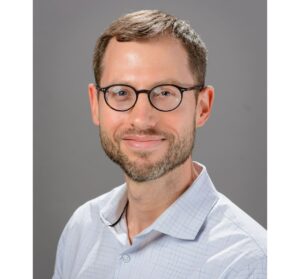
Chris Antoun
Assistant Professor
Joint Program in Survey Methodology (JPSM) and
College of Information (INFO)
University of Maryland